Blog Archive

Friday, 8 January 2016

Sri Lanka Day 8 - Sinharaja & Pitakele Road

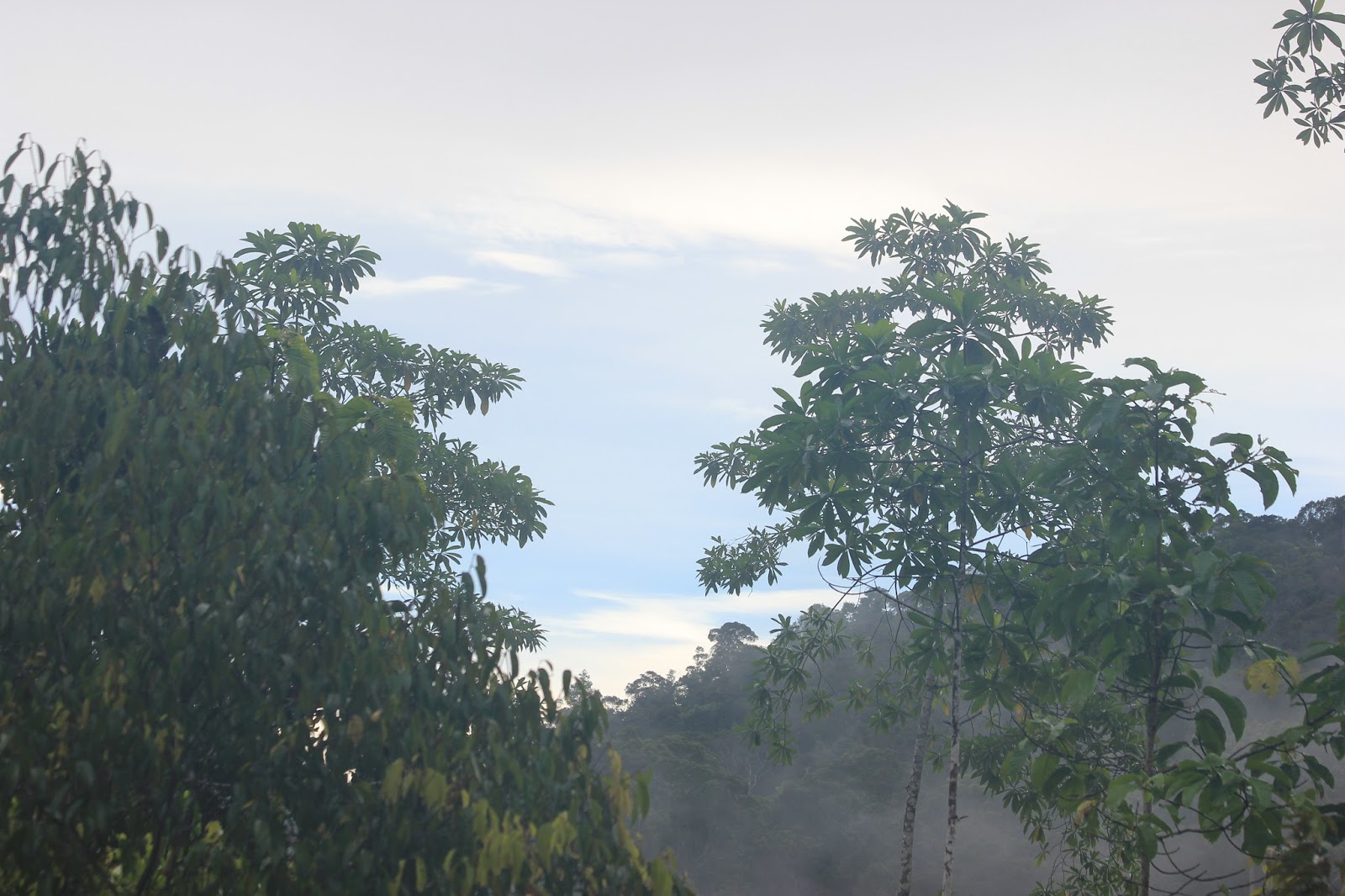
Another day, another bumpy jeep trip.   Back to the forest which was looking spectacular in the early morning mist. 
Misty morning


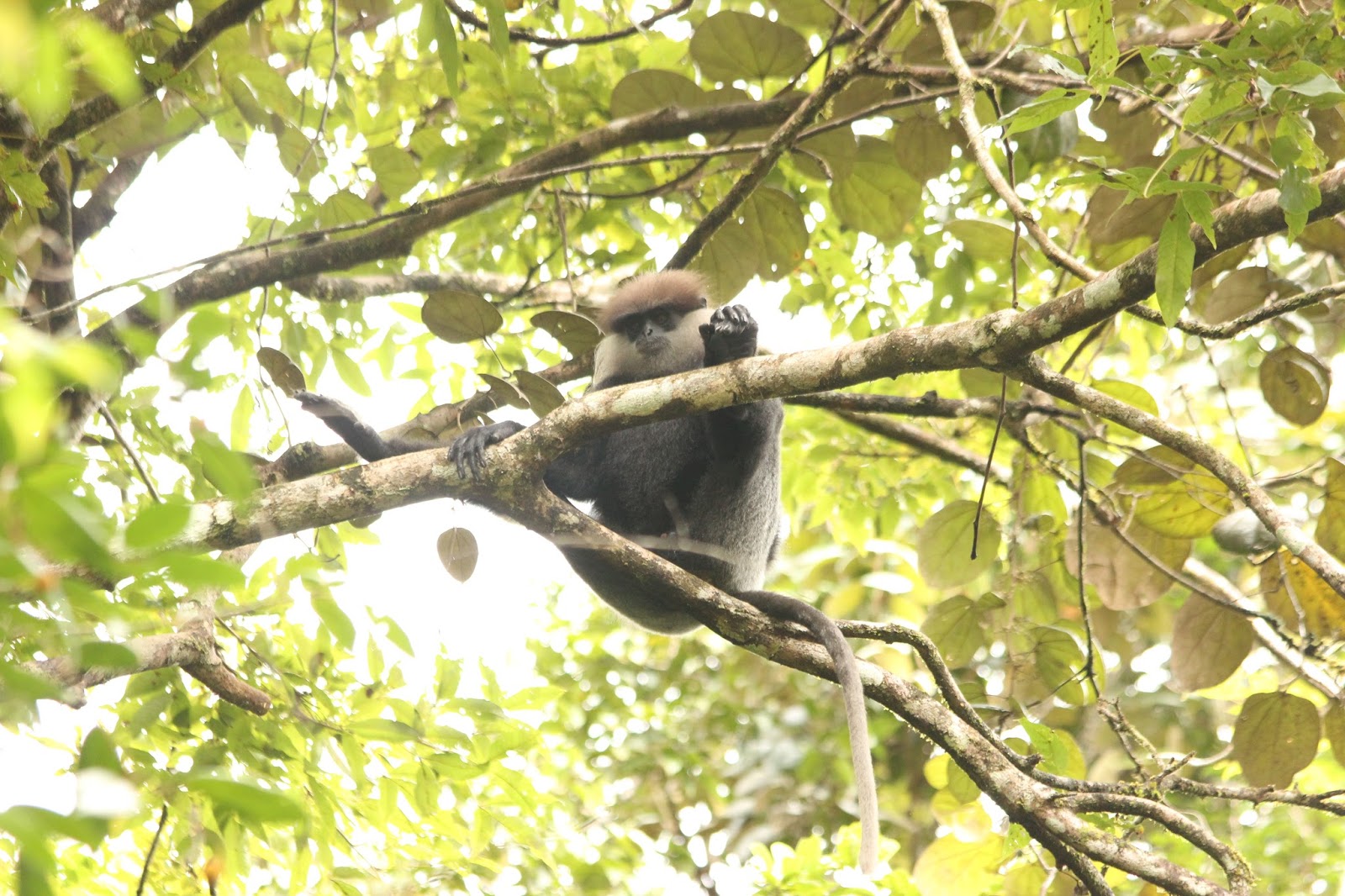
Purple-faced Leaf Monkey (with modesty intact)
At one point a group of Purple-faced Leaf Monkey (Bear Monkey Highland Race) were found and we had great views - we were just debating the noticeable similarities with various members of the group when one of them decided to treat us to a full-frontal uninhibited view.  There the similarities luckily dissolved!


We stopped at the education centre, dodging the rain showers, and whilst some watched for leeches, a couple of us tried to track down a calling Indian Pitta - no to avail I might add - and the rest hung around the garden to see what could be found.   We had some great views of birds previously only glimpsed, and had a stunning encounter with Common Green Lizard as it ran across the path in front of us with a cicada in its mouth.   It stayed in the undergrowth nearby for ages as we all watched.
Common Green Lizard with Cicada


On the way back to the lodge Peter had a stick insect on his hand, which we tried to photograph - not easy when you are being jostled about in the back of a truck with nothing to hang on to, so not the best idea. 

see the rather dodgy result below!

Soon it was time to go back to the lodge for lunch, and a (very short) rest.

Our afternoon walk from the lodge took us to the nearby Pitakele Road.   Along the way many of the smallholdings were putting out their tea harvest to be collected.   Some homes had small orchards with fruit trees and one farmer also harvested Beetlenut.

An adult Changeable Hawk-eagle was perched in a tree above an old nest, and as we moved up to a higher area a juvenile was seen.   It had a short contretemps with a mongoose and then perched on top of a palm tree.   This gave us all an excellent opportunity to study it and take photographs
Juvenile Changeable Hawk-eagle

In a small cinnamon plantation there were several beetles and a beautiful red, blue and black moth. 

Unidentified Moth

Monday, 4 January 2016

Sri Lanka Day 7 - Sinharaja National Park - the day Peter gave blood

Sinharaja Forest Reserve is a World Heritage Site, and on arriving at the visitor centre the relief map of the area certainly showed us why.   It is a huge area, mainly kept as sanctuary  but with some key trails into the forest which are accessed by jeeps on very bumpy trails.

Once we were dropped off at the trail head, we were left to explore the area and look for more birds and mammals to add to our ever -growing list.   With a packed lunch we looked forward to a full day here.
Serendib Scops-Owl

The only downside to the day was the presence of Leeches - only small ones and by no means as many as I encountered in Vietnam, but it was still hard to ignore the fact that there could be a blood-sucking devil on you!

However we had to concentrate as there was a whole new set of highland birds for us to find, along with more butterflies and several snakes.
Sri Lanka Frogmouth

One of our main interests here was Serendib Scops-Owl, and there was great news when we arrived, as one of the local guides had found an Owl the previous afternoon.   As we trekked through muddy overgrown paths, over bamboo bridges and through dense undergrowth, the anticipation was building.   Amazingly, this beautiful Owl was roosting not far from where we stood, low to the ground and totally at ease with our presence.  We all had great views, got some good photographs (although there were branches across it [aren't there always?!], and spent ages just watching and enjoying the moment.
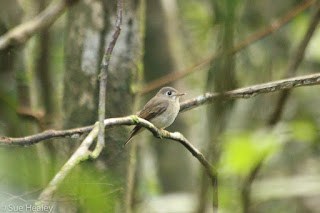
Brown-breasted Flycatcher

As if this wasn't enough excitement for a morning, our next stop was again through muddy undergrowth to see a pair of Sri Lanka Frogmouth.   One was behind the other and not immediately visible, but again, they appeared completely at ease as we watched from a reasonable distance.

After these two highlights it was back to Leech-watch and hunting through the canopies for feeding flocks.

Pitcher Plant
Indian Peafowl - better known as Peacock in the UK - is in this area, and was to be an almost constant on our list after today.   They seem on the face of it a rather incongruous bird to have in the middle of a wild place.   However, as we saw them in various habitats I gradually realised that they were absolutely in their element and provided a beautiful, elegant addition to the countryside.  Roosting high up in the trees, with their tails hanging down they were brilliantly camouflaged - their tails appearing to be part of the tree.

We were back with Pigeons and Doves here, with Grey-capped Emerald-dove, Sri Lanka Green Pigeon and Green Imperial-Pigeon.  A male Malabar Trogon gave us a good show, wagging its tail as it called. Bar-winged Flycatcher-shrike was a catch-up for me here, 

Watching the Frogmouth
Black-naped Monarch and Asian Paradise-flycatcher gave regular stunning views - the latter in both white and rufous forms.   Sri Lanka Crested Drongo eventually showed well, but not before we had worked for it.   Sri Lanka Blue Magpie was the final star of the avian show for us today, with four individuals preening in low branches.

The flame of the Sri Lanka junglefowl was on show throughout the day.  

After our picnic lunch, we had a second walk, not as productive as the first, but we did see three snakes, several new butterflies and a few more Leeches.

Crested Treeswift appeared in the lodge garden.

However, the main "highlight" of the day was the way that Peter dealt with his blood letting experience, taking one for the team and even keeping his cool when his favourite shirt was wrecked. 
Peter taking one for the team!

Sri Lanka Day 6 - Victoria Park and transfer to Sinharaja NP

Another rainy trip to Victoria Park before breakfast.   Despite our best efforts we failed to find much more for the list although we did have some lovely views of Forest and Grey Wagtail, Pied Thrush and Oriental Magpie Robin.
Western Spotted Dove

After a quiet stop at Galway forest corner (a meeting of two lanes near the hotel which had been brilliant yesterday) we went off for breakfast then our transfer to Sinharaja.  

We stopped at the Plantation Hotel by the river at Kitulgala for lunch, then onwards to the famous Blue Magpie Lodge.


Along the road

Sri Lanka Day 5 - Horton Plains

Today was spent in the Montane Cloud Forest area of the Horton Plains.   We arrived early and were surprised that there was a queue forming behind us within moments on our arrival.
Sri Lanka Junglefowl

Given that it was grey and raining, and in fact continued to rain all day, there were a lot of people, mainly tourists, ready to "experience the real Sri Lanka".

Birding under and umbrella is never easy, but at least it wasn't windy and there were facilities - quite a luxury on these holidays.

Sri Lanka Woodpigeon got onto our trip list, as did Pied Bushchat and Dull Verditer Flycatcher.
Hill Swallow showing dingy underparts

One star was Zitting Cisticola which showed off nearby along with Great Tit which is a greyer version of our own, Grey Wagtail, and Black-headed Munia.

My moment of the day was to find a bird of prey flying low over the fields ahead of us which turned out to be a Pallid Harrier.
Yellow-eared Bulbul

Back to the hotel for yet another great Sri Lankan dinner.

Sri Lanka Day 4 - The Road to Nuwara Eliya

After enjoying some early morning birding in the garden, again, around the magic tree - where we added Jerdon's Leafbird to our trip list; and an excellent breakfast, we were off to Nuwara Eliya.    

A couple of roadside stops along the way gave us the opportunity to stretch our legs, and also have Ceylon tea and chocolate cake at the St Clair Tea Room.   Crested-serpent Eagle, Great Tit, Common Kestrel and House Sparrow were added along the way.
Sri Lanka Hanging-parrot

Sadly several Indian Flying Fox were seen tangled up in electric cables as we travelled along. 

By lunchtime we were nearing our next hotel and had a profitable half an hour or so at a track crossway, here we had over 100 Sri Lanka White-eye, feeding on what appeared to be small mimosa flowers.   Grey-headed Canary-flycatcher, Greenish Warbler and Sri Lanka Scimitar-babbler were all additions to our sightings. 

In the afternoon, as the heavens opened again, we stopped near a local wetland on the way to Victoria Park.   Several Pintail Snipe were seen feeding in the flooded pasture.
Sri Lanka Gian Squirrel

At the park we managed to add Forest Wagtail, had great views of a male Indian Blue Robin, but the star of the show was Indian Pitta, a species we were to hear on many occasions over the rest of the trip, but which would elude our eyes!
Indian Pitta

Brown Wood-owl was heard as we neared the hotel for dinner.

Mammals added: 
Dusky Striped Squirrel, and 'Highland grizzled' form of Sri Lanka Giant Squirrel. 

Sri Lanka Day 3 - Kitulgala

A pre-breakfast walk in the garden added oriental white-eye, Sri Lanka Hanging-parrot, Golden-fronted Leafbird, Common Iora, Southern (Lesser) Hill Myna - several showed well on a tree some way distant but were scope-able.   We quickly realised that there was a magic tree in the back garden of the hotel which the birds were loving and we centred our attention there.

In the front garden of the hotel a Common Hawk Cuckoo gave some interest with its accipiter-like flight, photographs gave final confirmation.   Peter found a red-rumped swallow (soon to be Sri Lanka swallow?).   
Kitulgala

At breakfast and from the restaurant we had Chestnut-headed Bee-eater in the 'scope. 

A bird of prey was found by Upali, which as finally found to be Crested Goshawk. 

After breakfast we walked the suspension bridge in search of Sri Lanka Junglefowl and were not disappointed with at least three males and a female.   At one point we had three Oriental Honey Buzzards visible.  Brown-headed Barbet moved from the heard to seen list, several male Scarlet Minivets showed off to their females, whilst Brown-breasted Flycatcher tried hard not to show its diagnostic pale legs!
Yellow-billed Babbler

Best photographic opportunity was given by Tickle's Blue Flycatcher.

A good day for nests with Grey-capped Emerald Dove, Spot-winged Thrush and White-rumped Munia nests all found. 


Mammals


Wet lowland form of Sri Lanka Giant Squirrel 
Palm Squirrel

Ranweli to Kitulgala

Day two dawned and we were off on a pre-breakfast cruise on the Gin River (also known locally as Oya Gin or Little Gin River).   Two of us were lucky enough to spot a Slaty-legged Crake as it flew in at the side of the path to the jetty, never to be spotted again, sadly!

The cruise gave us another opportunity to see herons and egrets; Yellow Bittern, Little Egret, Striated (green) Heron and Purple Heron being particular highlights.    A white morph Western Reef Heron was finally identified by photograph - not mine I might add.  
Striated Heron

There were also excellent opportunities to compare Little and Indian cormorant as we drifted along.   Indian Thick-knee shyly moved behind a large bush, but was finally seen by everyone. 

Common Kingfisher gave a great show as it dipped into the river then sat preening on a low branch.   Black-hooded Oriole and Large-billed (Jungle) Crow were also seen in the trees.

Several Common Sandpiper and a Common Redshank were spotted on the return journey.    Lesser Sri Lanka Flameback (endemic) showed off well whilst Purple-rumped sunbird and a pair of Lotens Sunbird were more of a challenge to see.   Hardest though was Blyth's Reed-warbler which skulked in the undergrowth giving the most tantalising of views.
Water Monitor

Raptors seen included Black Eagle, Shikra and Brahminy Kite.   Four Lesser Whistling Ducks flew and Little (House) Swift, were joined by Asian Palm Swift overhead.   Back to the hotel for breakfast - the Sri Lankan curries were fantastic - and for some of us a walk on the beach again.   We wanted to get another look at the waders and see if there were any terns present, as the couple who had stayed at the hotel before we arrived had seen large groups of terns the previous days.

After much debate and many photographs we were still unsure about Little/Saunders Tern, so we settled for Little.   We also saw Common, Greater Crested and Lesser Crested terns.   

White-bellied Sea-eagle soared above us and Plain Prinia was also seen. 

On our journey to the next hotel at Kitulgala we added Ashy Wood-swallow.

Kitulgala
After a beautiful curry lunch, and some early afternoon rain, we set off for a walk where we saw Western Spotted Dove, Sri Lanka Green Pigeon (endemic), Green Imperial Pigeon, Greater Coucal showed well as did Sri Lanka Grey Hornbill, we heard Brown-headed Barbet and Yellow-fronted Barbet (endemic) and Indian pitta.

Sri Lanka Hanging-parrot (endemic), Emerald-collard (Lanyards) Parakeet (endemic), Alexandrine Parakeet, Red-vented Bulbul, Yellow-browned Bulbul, Square-tailed Black Bulbul, Oriental Magpie Robin, Asian Brown Flycatcher, Green Leaf-warbler, Orange-billed Babbler (endemic), Yellow-billed Babbler - all came thick and fast. 

Indian swiftlets (of the birds nest soup fame) fed overhead.   

However, Chestnut-backed owlet stole the show late in the afternoon as the light started to fade.

Dinner was another amazing feast of spicy curried delights - we were already getting used to three curries a day!

The hotel we were staying at was set on the bank of the River Kelani Ganga where David Lean set his film Bridge Over the River Kwai.

Non-avian sightings included: 
Torque macaque, Purple-faced Leaf Monkey, Water Monitor, Palm Squirrel 

Wednesday, 30 December 2015

Back in Kent

A quick jaunt to Chatham Dockyard today to catch up with a Great Northern Diver which has been present for a few weeks.
Great Northern Diver

Then it was off to Riverside Country Park.

A lovely sunny morning enabled some good views of gulls and waders but with the tide against us, distant views meant that we needed the 'scope.
Black-headed Gull
As the tide rose, and the birds got closer, the sky got greyer, so not the best opportunities for photographs, but with a few flowers in bloom - an odd "winter" this year - there were some good sightings, including two Peregrine Falcons, and some fantastic views of Wigeon and Teal.
Beautiful male Wigeon

Black-tailed Godwit

A good end to my 2015 birding.

[next blog back to Sri Lanka . . . . ]

Saturday, 26 December 2015

Ranweli Resort, Sri Lanka

After an overnight direct flight with Sri Lankan Airlines four of our group arrived in Colombo for our transfer to Ranweli Resort a beach side hotel (Rock Dove, House Crow, Asian Openbill and many Egrets along the way) with lovely grounds, just ripe for some birding.    We met up with the couple who had been enjoying a pre-trip holiday and went off in search of some avian delights.
Ranweli Beach

The beach held a group of waders; Sanderlings with Greater and Lesser Sandplover - excellent to see whilst Barn Swallow and Blue-tailed Bee-eater perched on driftwood nearby adding splashes of colour.

Half-flower plant Scaevola, originally from Hawaii

Along the Gin River or Oya Gin (meaning small Gin River) which runs behind the beach we found White-breasted Waterhen, Red-wattled Lapwing, Black-crowned Night-heron, and many Indian Pond Heron.

Common Sandpiper, Whimbrel, Grey Heron and Great White Egret all added a more "homely feel" but then glamour returned with Pied Kingfisher, Stork-billed Kingfisher and White-breasted Kingfisher.
Flying Fox Pteropus giganteus

We were in the true realm of Rose-ringed or Ring-necked Parakeet, and for once the group were pretty dismissive of such an exotic species!   White-bellied Drongo gave us good views, along with Brown Shrike and Common Myna.

As the light faded we had Flying Fox overhead, coming out of their day roosts in the top of the palm trees.

Then it was off to dinner!
Some of the delights at dinner


Saturday, 7 November 2015

Autumn in Hampshire

Autumn colours in the New Forest

Dodgy phone-scoped Osprey
A couple of days in Hampshire and a few new birds for the year list (which is actually a paltry one this year).
Nuthatch


Over 80 species seen in appalling weather - we had to completely abandon the great outdoors on Thursday - but the highlights for me were;
Coal Tit

Osprey - juvenile perched for all to see at Blashford Lakes, and had been there for three weeks, Brambling and Siskin, a late Whinchat, several Stonechat and best of all, fantastic views of Goshawk - a female flying low over bracken at Bishops Dyke gave two fly-pasts and was the highlight for me.

Brambling

Great-spotted Woodpecker


Saturday, 24 October 2015

A load of Galls

We recently found these small galls on Ground Ivy leaves at Sevenoaks Wildfowl Reserve.

They are Rondaniola bursaria or Lighthouse Galls.   You can see the fresh calls on the first photograph and then the holes in the leaves once the midge has emerged.   The fly is Dasineura glechomae for those interested. 

Galls intact
Holes where midges have emerged

Friday, 23 October 2015

Common Toad

Common Toad-let!
Recently found this small Toad - presumably common toad - it was under a reptile sheet in grass at the edge of a lake.   Very obliging individual that didn't move a muscle whilst a few shots were taken.

After a few moments it was left in peace.

Happy days

Thursday, 22 October 2015

Migration in Action!

Went out for a walk yesterday - the worst weather of the week!   However, the recent change in weather patterns brought several delights including huge flocks of migrating Chaffinch - all males either adult or first winter birds.

There was one particularly large flock just outside Sevenoaks Wildfowl Reserve - feeding in a field where horses were kept.   There were obviously rich pickings as over 100 individuals were flying from the ground to trees nearby every time they were disturbed by the horses, only to return to the ground as soon as they felt safe again.

Grey Wagtail
The male Chaffinches often migrate through or to the south-east of England from Scandinavia - the females prefer to move further west and are often found in similarly large flocks in the south-west of England and Ireland.

With large numbers migrating south into the UK, our population can double during the winter.   The males tend to migrate nearer to their breeding areas, believed to be so that they will arrive on territory in top condition (rather than tired from a longer journey).   The females have longer to migrate back to territory in the spring arriving once the male has secured the position - hence their longer migration.

See more information courtesy of the BTO here

At Bough Beech I also saw my first Redwing and Fieldfare of the winter - with around 50 Redwing (thanks to Sally for spotting them fly in) and one pair of Fieldfare (Malcolm's find).   Despite there being many birds busily feeding on the berries nearby, not one photograph was possible!   There was a grainy shot of a lovely Grey Wagtail though.

Fourteen Snipe dropped in and spooked Lapwing and Greylag - presumably they mistook them for a bird of prey.
Cormorant, Greylag, Lapwing & Teal

Another delight was a surprising number of Goldcrest - they have been reported widely in the last week or so, and for once we actually caught up with them in pairs on several occasions.   As usual at this time of year, there were Long-tailed Tit everywhere - contact calls echoed around us all day. Brilliant!

To round off the day, we had great sightings of two Kingfisher on several occasions - they appeared to be patrolling the edge of a lake.   Still no photos though!


Sunday, 18 October 2015

Birds on a Wire

Watching the migrants gathering on wires at Sheppey . . . . . mainly linnet, but with some goldfinch joining in the fun.
Goldfinch on the top wire

Further on there were several stonechat, probably a family group.

Other autumn signs were galls on poplar trees.
These spiralled lumps along the leaf petioles, create a red spiral shaped lump and the leaf then sticks out of the end of the gall.  These are usually caused by an aphid, probably Pemphigus spyrothecae, although the name p. protospirae is also referred.

Poplar spiral galls


There were also many wild flowers going to seed, which will provide great food for migrants as they pass through on their long journey south.

Here's to a great autumn.


Monday, 12 October 2015

Great Green Bush-Cricket

A couple of weeks ago we found this female Great Green Bush-cricket Tettigonia viridissima at Sandwich Bay observatory.

I have been lucky enough to have seen several individuals in the last few weeks - mainly due to the searching skills of Malcolm & Sally.   

Female Great green Bush-cricket
This individual, however, was not hard to see as she was in the middle of the path and just waiting to be stepped on!   We watched for several minutes - as the camera came in closer, so she became more fascinated and actually walked towards it - maybe the reflection was interesting her.

However, after a while we moved on to to some bird watching.

Some while later we returned and much to our amazement she was now further into the side of the path, but was firmly planted with her ovipositor pushed into the ground.

As we got nearer, it was clear that she was laying eggs deep into a crack between broken concrete.   Every so often she almost retracted the ovipositor, changed the angle then pushed it deep into the ground again and started to flex her abdomen.   We watched as she did this several times.

We eventually left her to her work, marvelling at our luck in finding such a great event.

To see the walk click here

To see the egg laying click here


Sunday, 13 September 2015

Spotted Flycatcher

Spent a delightful half and hour or so watching this Spotted Flycatcher as it preened, oblivious of our presence.   After some time sorting out the feathers, it flew out, caught a tasty morsel and came back to the same perch.

Marvellous!


Saturday, 5 September 2015

Wallasea Island

A few shots from Wallasea Island, Essex.   A new RSPB Reserve which is being developed to encourage greater areas of salt marsh, and providing encroachment areas for a rising sea level.


Wallasea Island mud flats


With a low tide there was not too much to see along the mud flats beyond the sea wall.


Reserve under development
Inside the sea wall the RSPB are developing a new Reserve with scrapes and plenty of mud!


Weasel


This weasel appeared to be chasing a whinchat - we didn't see the whinchat after it had flown off - presumably keeping out of our way as well as that of the weasel.


Small heath


Several small heath butterflies were around, surprising me at first as they were so small.


We saw some we missed some


Quite an encouraging list from so new a reserve - bearing in mind the number of canada geese present, there is some real potential here for wintering geese and wildfowl.

We had over 25 yellow wagtails - none were close enough for my camera skills sadly.   Huge flocks of linnet and goldfinch, whimbrel, kestrel, grey heron, several little egret and mute swan.

In addition swallow were flying inside the sea wall feeding just below us, giving great views.